Affordable Dental Services in Rajajinagar

Skip to content
A toothache that won’t quit, a stubborn wisdom tooth pressing against your gum, or a swelling near your jaw that just won’t go away – these are the moments people usually start searching for “oral surgeon near me” in a slight panic. The good news is that oral surgery today is nowhere near as intimidating as it sounds. Most procedures are quick, well-managed with anaesthesia, and followed by a recovery period that’s shorter than most people expect.
At Dr Hiremath Charitable Dental Hospital in Rajajinagar, Bangalore, oral and maxillofacial surgery is handled by experienced specialists using modern diagnostic tools like OPG and CBCT imaging – and because the hospital runs on a not-for-profit, charity-based model, patients only pay for materials used, with no consultation or service charges added on top. That means a genuine second opinion or a much-needed extraction doesn’t have to come with a bill that makes you postpone treatment until the pain becomes unbearable.
This guide walks you through the four situations that most commonly bring people to an oral surgeon: routine and surgical tooth extractions, wisdom tooth removal, cyst and tumor removal in the jaw, and corrective jaw surgeries.

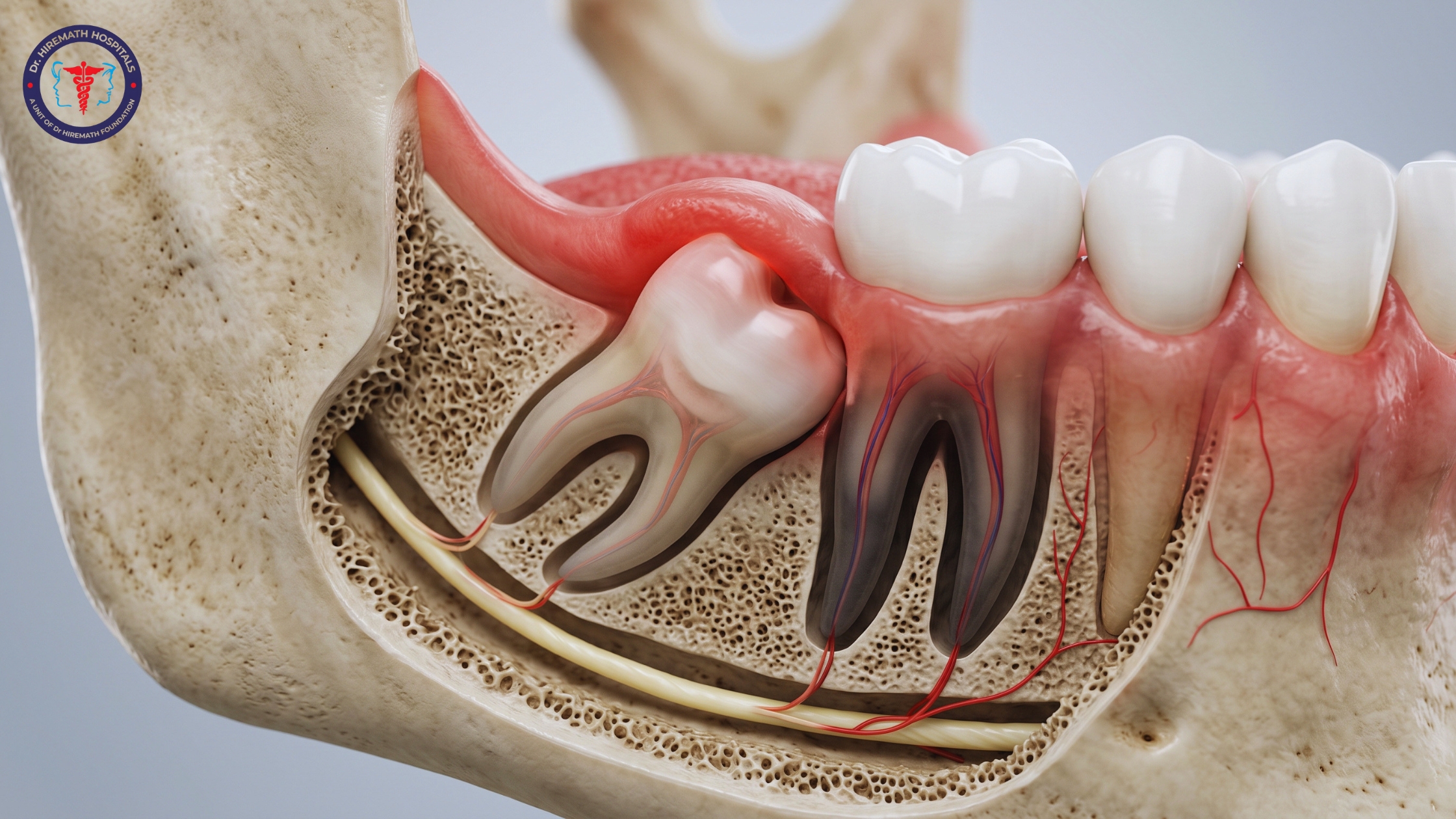
Oral surgery is a branch of dentistry that deals with problems a filling or a root canal simply can’t fix. It covers anything that involves cutting into gum tissue, bone, or jaw structure – from removing a damaged tooth to reshaping the jawbone itself. Unlike general dental treatments, these procedures are usually planned in advance with imaging, a review of your medical history, and a clear discussion of anaesthesia options before the day of surgery.
Patients are referred to oral surgery when a tooth is too broken down to save, when a wisdom tooth is stuck (impacted) beneath the gum, when a cyst or growth is discovered near the jawbone, or when the jaw itself is misaligned, injured, or affected by a joint disorder.
Not every extraction is the same, and understanding the difference helps you know what to expect.
Simple extractions are performed on teeth that are visible above the gumline and can be loosened with dental instruments before being lifted out. These are typically done for teeth that are severely decayed, cracked beyond repair, or loose due to advanced gum disease.
Surgical extractions are needed when a tooth has broken at the gumline, hasn’t fully erupted, or has curved or fused roots. In these cases, a small incision may be made in the gum, and occasionally a bit of bone is removed to access the tooth safely. It sounds more involved, but with proper local anaesthesia, patients typically report far less discomfort than they anticipated.
Wisdom teeth, or third molars, usually try to erupt between the ages of 17 and 25 – right when the jaw has often run out of room for them. When there isn’t enough space, the tooth can grow sideways, remain trapped under the gum, or only partially emerge, creating a flap of tissue where food and bacteria collect.
Left untreated, an impacted wisdom tooth can lead to infection, crowding of neighbouring teeth, or cyst formation around the crown of the unerupted tooth. Removal is usually done under local anaesthesia, and while some swelling for two to three days is normal, most people are back to their regular routine within a week, following simple aftercare like cold compresses, soft foods, and avoiding straws (suction can dislodge the healing blood clot).
Jaw cysts and tumors sound alarming, but the majority discovered during routine dental X-rays are benign (non-cancerous) and grow slowly, often without symptoms in the early stages. A dental cyst – commonly a fluid-filled sac that forms around the root of a dead or infected tooth – is one of the most frequent findings.
What patients might notice:
Diagnosis typically starts with imaging – an OPG (panoramic X-ray) or a CBCT scan for more detailed 3D views – followed by a biopsy if needed to confirm the nature of the growth. Treatment ranges from a straightforward enucleation (removal of the cyst lining) to more extensive surgery for larger lesions, sometimes paired with bone grafting to restore jaw structure afterward. Early detection through regular dental check-ups makes a significant difference in how simple this treatment turns out to be.
Jaw surgery, sometimes called orthognathic surgery, addresses problems that go beyond individual teeth – such as a misaligned bite, an underdeveloped or overgrown jaw, facial asymmetry, or jaw fractures from an accident. It’s also used to treat certain TMJ (temporomandibular joint) disorders that cause chronic jaw pain, clicking, or difficulty chewing.
Situations that may call for jaw surgery:
These procedures are more complex and are usually planned with a team approach – combining imaging, sometimes orthodontic input, and a detailed surgical plan tailored to the patient’s anatomy. Recovery is longer than a simple extraction, often a few weeks, but the functional and aesthetic improvements are typically long-lasting.
One of the biggest reasons people delay oral surgery isn’t fear of the procedure – it’s the fear of the bill. Dr Hiremath Charitable Dental Hospital was built specifically to remove that barrier. As a not-for-profit dental hospital, the model here is straightforward: patients cover only the cost of materials and equipment used, with no separate consultation or service fees layered on top.
That approach, combined with advanced diagnostic technology such as CBCT and OPG imaging, laser dentistry, and an intra-oral scanner, means Rajajinagar families don’t have to choose between quality and affordability. Whether it’s a single tooth extraction or a more involved jaw procedure, treatment decisions here are based on clinical need – not on what generates more revenue.
Regardless of which oral surgery you undergo, a few habits make healing smoother:
Oral surgery covers a wide spectrum – from a single troublesome tooth to complex jaw reconstruction – but none of it needs to be a source of dread. Timely evaluation, proper imaging, and a clear treatment plan turn what feels like a major procedure into a manageable, well-supported process.
If you’re in Rajajinagar or anywhere in Bangalore and dealing with tooth pain, an impacted wisdom tooth, an unexplained jaw swelling, or bite-related discomfort, Dr Hiremath Charitable Dental Hospital offers ethical, transparent, and affordable oral surgery care – because a healthy smile shouldn’t depend on how much you can afford to spend.
📍 Visit us: 4th N Block, 48/2, 59th B Cross Rd, Rajajinagar, Bengaluru, Karnataka, 560010
📞 Call: +91 9606060189
🕒 Hours: Mon–Sat, 9:30 AM–8:30 PM | Sun, 9:30 AM–2:30 PM
Most patients feel little to no pain during the procedure itself thanks to local anaesthesia. Mild soreness and swelling for two to three days afterward is normal and manageable with prescribed medication.
Simple extractions usually heal within a week, while surgical extractions may take slightly longer. Following aftercare instructions, like avoiding straws and sticking to soft foods, speeds up recovery considerably.
No. The vast majority of jaw cysts discovered during dental checkups are benign and grow slowly. A biopsy is often done to confirm this, and most are treated successfully without complications.
At Dr Hiremath Charitable Dental Hospital, patients pay only for the materials and equipment used during treatment. There are no separate consultation or service charges, making surgical treatments significantly more affordable than at commercial clinics.
Jaw surgery is recommended when a bite misalignment, facial asymmetry, or breathing/chewing difficulty stems from the jawbone’s structure itself, something braces or aligners alone cannot correct.