Best Cosmetic Dentist in Rajajinagar

Skip to content
Does your partner nudge you at 2 a.m. because your snoring is shaking the room? Do you wake up with a dry mouth and a dull headache, even after eight hours in bed? Your sleep may be trying to tell you something. For many people in Bengaluru, the cause is obstructive sleep apnea, and sleep apnea appliances are one of the most comfortable ways to manage it.
This guide explains what these devices are, how they work and who they suit. It also covers what to expect when you get one fitted. We wrote it in plain language, so you can decide your next step with confidence.
Quick takeaways

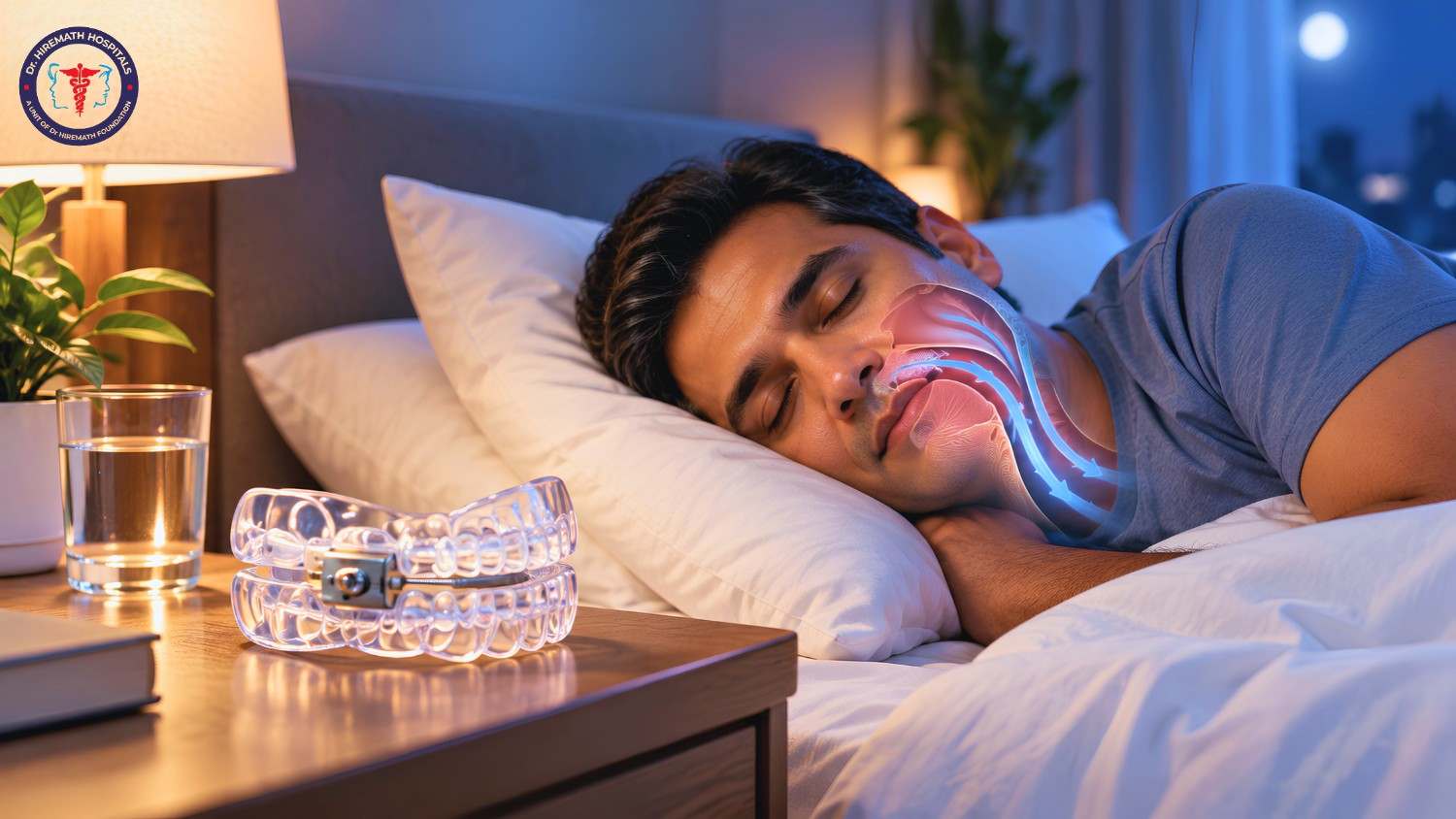
Sleep apnea appliances are dental devices worn at night. They gently hold your lower jaw or tongue in a forward position. This keeps the airway behind them open, so air can flow without the throat collapsing.
Dentists often call them oral appliances. You may also hear “sleep apnea mouth guard” or “anti-snoring mouthpiece.” They look a little like a sports mouthguard or a clear orthodontic retainer. They are small, quiet and easy to travel with.
During sleep, throat muscles relax. In obstructive sleep apnea, the tongue and soft tissues then slump backwards and narrow or block the airway. Your breathing pauses, your brain sends an alarm, and you drift out of deep sleep for a moment. This can repeat many times a night without you remembering it.
An oral appliance changes geometry. By moving the jaw slightly forward, it pulls the tongue and surrounding tissues away from the back of the throat. The airway stays wider, and breathing becomes smoother. Snoring often drops too, which your bed partner will notice first.
Custom-made vs. off-the-shelf: Boil-and-bite mouthpieces are sold online, and they look tempting. But they rarely fit well, and they cannot be adjusted with precision. A poor fit can strain your jaw and may not open your airway enough. Guidelines from sleep medicine bodies generally favour custom, adjustable devices made under a trained dentist’s care.
An oral appliance may suit you if:
Some people with severe sleep apnea also use appliances, but usually alongside or after other therapy. Your sleep physician should guide that decision.
Honest care means saying “not this one” when needed. An appliance may not be suitable if you have:
This is why a proper dental check-up matters before any device is made.
Most people need a few weeks to settle in, so patience helps.
Oral appliances are generally well tolerated, but mild effects are common early on:
Call us if pain continues or your bite feels wrong for more than a few days. Do not just adjust the device yourself.
Oral appliance | CPAP machine | |
Best for | Mild–moderate apnea, snoring, CPAP intolerance | All severities, especially severe |
Comfort | Small, silent, no hose | Mask, hose, airflow noise |
Travel | Very easy | Needs power and a carry case |
Effectiveness | Good for suitable patients | Usually stronger for severe cases |
Upkeep | Daily cleaning, dental reviews | Mask, filter and tubing care |
The best therapy is the one you will use every night. Many people do well with one, and some switch or combine over time.
Rajajinagar is home to busy families, working professionals and senior citizens. Poor sleep affects all of them yet cost often makes people postpone care. Our hospital was built to change that.
We are a not-for-profit dental hospital. We do not charge consultation or service fees, and patients pay only for materials. Our approach is simple: your treatment plan follows what you need, not what costs more. Our team explains every step, answers your questions and never rushes you.
You also benefit from having every specialty under one roof. If your sleep problem connects to jaw pain, grinding, missing teeth or gum health, we can look at the whole picture together.
Constant tiredness is not something you have to accept. If you snore heavily, wake up gasping, or feel exhausted throughout the day, get it checked. If you are looking for sleep apnea treatment in Rajajinagar, sleep apnea appliances can be a gentle, practical solution when they are properly chosen, fitted, and monitored by a qualified dental professional.
Visit Dr Hiremath Charitable Dental Hospital at 4th N Block, 48/2, 59th B Cross Rd, Rajajinagar, Bengaluru 560010. Call +91 96060 60189 or book a check-up on WhatsApp. We are open Monday to Saturday, 9:30 AM to 8:30 PM, and Sunday, 9:30 AM to 2:30 PM.
This article is for educational purposes and does not replace a medical diagnosis. Please consult a qualified professional about your symptoms.
A custom-made, adjustable mandibular advancement device is generally considered the best option for most suitable patients. It holds the lower jaw slightly forward to keep the airway open. Your dentist chooses the type after checking your teeth, jaw and sleep test results.
A dentist cannot diagnose sleep apnea, but a dentist can treat it with an oral appliance once a physician confirms the condition. The dentist designs, fits and adjusts the device, and monitors your teeth and jaw over time.
Yes, for the right patients. Custom oral appliances can reduce breathing pauses and snoring in mild to moderate sleep apnea. Cheap over-the-counter guards vary widely in fit and effectiveness, so professional assessment gives safer, more reliable results.
Not always. CPAP is usually more effective for severe sleep apnea. An oral appliance is often easier to wear, so some people use it more consistently. Your sleep physician and dentist can help you pick the right one.
Cost depends on the device type and materials. Custom-made appliances cost more than boil-and-bite ones. At Dr Hiremath Charitable Dental Hospital, there are no consultation or service charges, and you pay only for materials. Call +91 96060 60189 for an estimate.